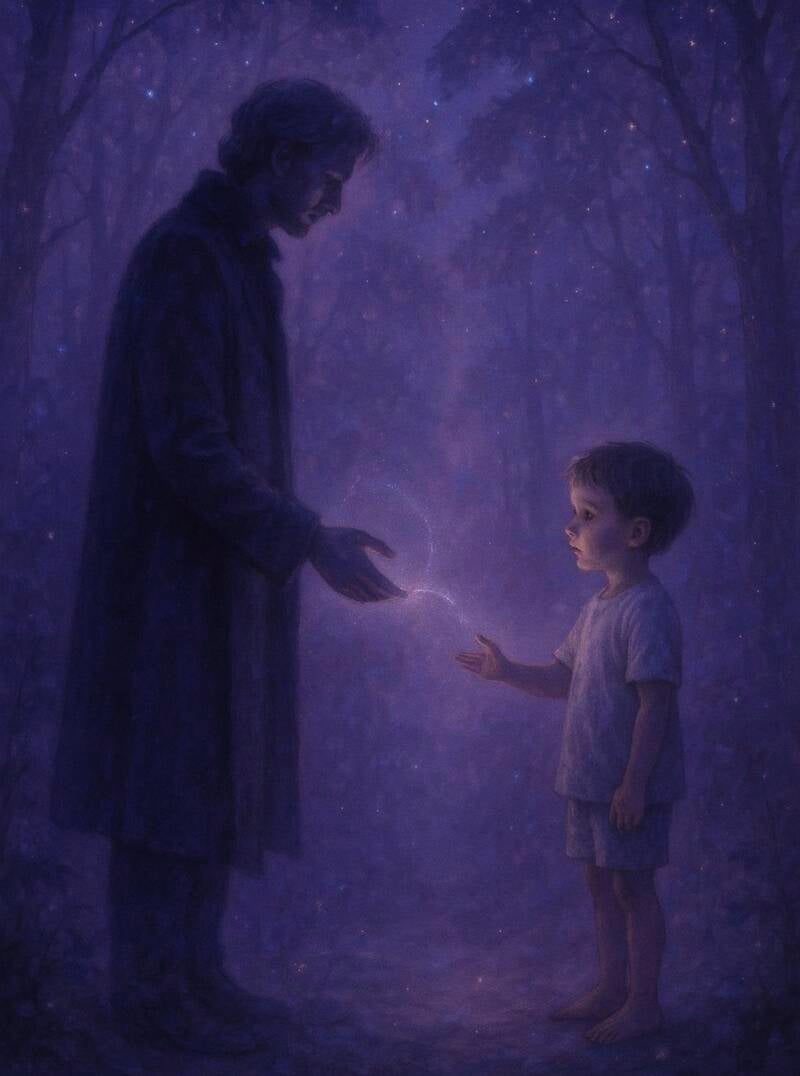
Healing Isn't Erasing the Past—It's Becoming New Evidence
For a long time, I believed healing meant reaching a day when certain memories no longer hurt.
A day when the fear wouldn't appear.
When the trigger wouldn't land.
When my nervous system would finally stop reacting to things that belonged to another chapter of my life.
Maybe you've hoped for that day too.
But what if we've misunderstood what healing has been asking of us all along?
---
Neuroscientist Joseph LeDoux has spent decades studying how fear is formed in the brain.
One of his most important discoveries is surprisingly comforting.
Your brain doesn't simply erase fear memories.
The pathways created during frightening experiences remain. From an evolutionary perspective, that makes perfect sense. A brain that remembered danger was far more likely to survive than one that forgot it.
Which means something many of us quietly interpret as failure is actually evidence of a nervous system doing exactly what it was designed to do.
The return of fear doesn't necessarily mean you've gone backwards.
It often means your brain remembered.
---
For years, we've been taught to think of healing as subtraction.
Let go.
Release.
Move on.
Get over it.
Erase the past.
But biology tells a different story.
Your brain rarely heals by deleting.
It heals by adding.
---
One of the remarkable features of memory is something called memory reconsolidation.
Each time a memory is recalled, it briefly becomes flexible again before it is stored once more.
During that window, new information can be integrated alongside the original experience.
Notice what that doesn't say.
It doesn't say the original memory disappears.
It says something new can arrive.
That difference changes everything.
Because perhaps healing was never asking us to become someone without scars.
Perhaps it has always been inviting us to become someone whose scars are no longer the only story the nervous system knows how to tell.
---
That truly feels far beyond neuroscience.
Think about a forest after a wildfire.
The burn marks don't vanish overnight.
The forest heals because new growth begins to share the same ground.
The scar remains.
It simply stops being the only thing there.
Maybe we aren't so different.
---
I've been thinking a lot lately about something we've explored here before.
The youngest version of you wasn't lying.
They were making sense of a world they couldn't yet explain.
Children don't have decades of experience.
They don't understand nervous systems, attachment, trauma, or emotional regulation.
They gather information from the world around them and draw the most intelligent conclusions they can with the evidence they have.
If love disappeared...
They may conclude that people always leave.
If expressing emotion led to rejection...
They may conclude that feelings aren't safe.
If peace depended on keeping everyone else happy...
They may decide their worth is found in pleasing others.
Those conclusions weren't foolish.
They were adaptive.
They helped a child navigate a world they didn't yet have the language to understand.
---
As adults, we often spend years arguing with those early conclusions.
"I shouldn't feel this way."
"I know that's not true."
"Why can't I just move on?"
But perhaps the child inside us isn't waiting for better arguments.
Perhaps they're waiting for better evidence.
---
Every healthy boundary you survive.
Every honest conversation that doesn't end in abandonment.
Every relationship that proves safety can exist.
Every moment you rest without everything falling apart.
Every time you disappoint someone and discover you are still worthy of love.
Your brain gathers information that simply didn't exist when those original conclusions were formed.
Not false reassurance.
Not wishful thinking.
Evidence.
Real, lived evidence.
---
I wonder how many of us have been trying to erase the frightened child when what they have really been waiting for is company.
Healing isn't standing in front of them and saying,
"You were wrong."
It's kneeling beside them and saying,
"I know why you believed that. It made perfect sense then. But I've lived a little longer now, and I brought back something you never had the chance to see."
That may be one of the greatest gifts adulthood offers us.
Not the ability to rewrite childhood.
The ability to bring new evidence to a conversation childhood had to finish alone.
The return of fear isn’t evidence that healing hasn’t happened. It’s simply evidence that your brain remembered what it was designed to remember.
---
This also changes the way I think about triggers.
When an old fear returns, many of us assume we've failed.
We think we've undone all our progress.
But what if a trigger isn't proof you've gone backwards?
What if it's simply another opportunity for the newer pathway to arrive a little earlier than it did last time?
Not perfectly.
Just sooner.
Healing isn't measured by whether fear knocks.
It's measured by who answers the door.
---
Maybe that's what freedom really looks like.
Not becoming someone who has forgotten.
Becoming someone whose nervous system has learned there is more than one possible ending.
The original memory may always exist.
But today it no longer stands alone.
Today it shares the path with boundaries you kept.
With relationships that stayed.
With moments you survived.
With love you learned to receive.
With a self who no longer abandons you.
Perhaps your brain was never waiting for the fear to disappear.
Perhaps it was waiting for new evidence to arrive first.
And maybe that is what healing has been all along.
Not erasure.
Not perfection.
Not becoming someone new.
Simply becoming the evidence your younger self never had access to.
Add comment
Comments