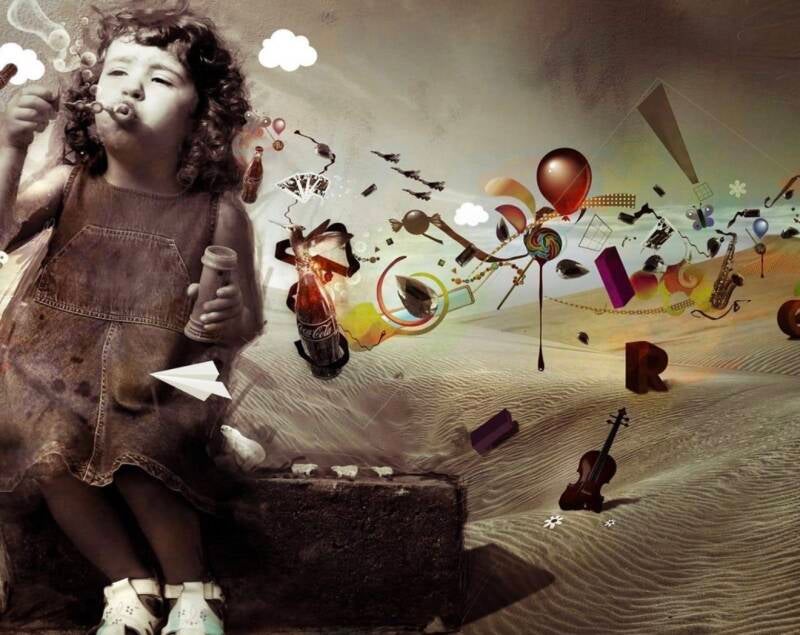
The Words They Forgot. The Ones You Never Did.
You can forget entire years of your life.
You can struggle to remember what happened last month, what you ate three days ago, or the name of someone you met last week.
Yet somehow, you can still remember a single sentence someone said to you twenty years ago.
Word for word.
You can hear the tone.
See the room.
Feel the exact sensation in your chest that appeared the moment the words landed.
Maybe it was a parent.
A teacher.
A sibling.
A friend.
A partner.
Someone looked at you and said something that seemed small to them but somehow became enormous to you.
And while they may not remember saying it at all, a part of you has been carrying it ever since.
Why?
Because the human brain does not store all memories equally.
Some memories fade.
Others become emotionally branded.
_________________________
Why Certain Words Never Leave Us
Many people assume that the memories we retain are the most important ones.
But emotional intensity often matters more than objective importance.
When an experience triggers a strong emotional reaction, the brain prioritizes it.
Particularly during childhood.
A child is not simply learning facts about the world.
A child is learning who they are.
Every interaction becomes information.
Every facial expression becomes feedback.
Every criticism becomes a potential lesson about worthiness, safety, belonging, or love.
When words arrive during emotionally significant moments, they can become deeply encoded within memory.
Not because they are true.
Not because they are accurate.
But because they felt important to survival.
_________________________
The Child Brain Doesn't Question. It Absorbs.
Adults can challenge information.
We can disagree.
We can consider context.
We can recognize when someone is projecting their own pain.
Children cannot do this nearly as effectively.
A child does not hear:
"Your parent is overwhelmed."
A child hears:
"There must be something wrong with me."
A child does not hear:
"My teacher is frustrated."
A child hears:
"I'm not smart enough."
A child does not hear:
"This person is speaking from their own wounds."
A child hears:
"This must be true."
This is why certain words become more than memories.
They become beliefs.
And beliefs become identities.
__________________________
The Invisible Sentences Running in the Background
Many adults are living according to sentences they never consciously chose.
You're too sensitive.
You're difficult.
You're selfish.
You're not attractive enough.
You're not smart enough.
You'll never succeed.
You'll never be loved.
The original words may have been spoken once.
But the nervous system repeated them thousands of times afterward.
Over years, these beliefs can quietly shape everything.
The relationships we tolerate.
The opportunities we pursue.
The boundaries we struggle to set.
The dreams we convince ourselves are unrealistic.
What began as someone else's opinion slowly becomes an internal narrative.
And eventually, we stop questioning it.
We simply assume it is who we are.
________________________
Why Emotional Memories Feel So Alive
Have you ever noticed how a particular tone of voice can instantly transport you back in time?
A look.
A criticism.
A moment of rejection.
Suddenly you're not responding to the present moment anymore.
You're responding to an old wound.
This is one reason emotional memories can feel so powerful.
The body often remembers experiences long after the conscious mind believes it has moved on.
A familiar pattern appears, and the nervous system reacts before logic has a chance to intervene.
Your racing heart isn't necessarily responding to today's situation.
It may be responding to yesterday's pain.
Or last decade's.
Or childhood's.
The memory is not merely being recalled.
It is being reactivated.
_________________________
The Most Important Question
What if the sentence you've carried all these years was never actually yours?
What if it was simply a moment in which someone else's fear, anger, shame, insecurity, or pain collided with your developing sense of self?
What if you've spent years proving yourself against a standard that should never have existed in the first place?
Many of the beliefs we carry were inherited, not chosen.
Learned, not earned.
Absorbed, not examined.
And healing often begins with a simple realization:
A deeply stored belief is not necessarily a true belief.
______________________
Rewriting the Story
The goal is not to pretend painful memories never happened.
The goal is not to force positivity over genuine wounds.
The goal is to separate what happened from what it meant.
The event may have been real.
The pain may have been real.
But the conclusion you formed about yourself may not be.
The child version of you did the best they could with the information available.
The adult version of you has something the child never had.
Perspective.
Choice.
Awareness.
The ability to question old narratives.
The ability to challenge inherited beliefs.
The ability to decide whether a sentence spoken years ago deserves to keep occupying space in your identity today.
____________________
Final Thoughts
You know the sentence.
The one that surfaced while reading this.
The one you can still hear.
The one you've spent years carrying.
Perhaps the most important thing to remember is this:
Just because your nervous system stored it deeply does not mean it was true.
Sometimes memories are records of pain.
Not records of identity.
And healing begins the moment you learn the difference.
Add comment
Comments