There are plants that calm you.
And then there are plants that awaken you.
Mugwort belongs to the latter.
She is an old, ancient, threshold-walking herb — the kind that grows in the cracks between worlds. She appears at the edges of paths, at the borders of fields, beside forgotten roads, as if she has always preferred the in-between places.
Long before therapy.
Long before nervous systems.
Long before “self-regulation” became a clinical term — humans turned to plants that knew how to speak directly to the soul of the body.
Mugwort was one of them.
In folklore, she is called the Mother of Herbs. A guardian, a guide, a keeper of dreams. She has been woven into charms, burned in sacred fires, tucked beneath pillows, and carried by travelers for protection against unseen forces.
Across traditions, mugwort has walked many names and many roles.
In European witchcraft, she is a door-opener to intuition.
In Chinese medicine, she is burned as moxa to move stagnant life force through the body.
In Indigenous lineages across lands, she has been used in ceremony, cleansing, and vision work.
In village lore, she was planted near doorways to guard the home from spiritual harm.
But mugwort’s true power is not only what she protects you from — it is what she allows you to feel.
Most plants that soothe the nervous system quiet the body. They soften the edges, slow the pulse, dim the lights of sensation.
Mugwort does something different.
She does not dull the heart.
She does not hush the spirit.
She does not wrap you in cotton silence.
Instead, she gently peels back the veil and asks: Are you ready to feel again?
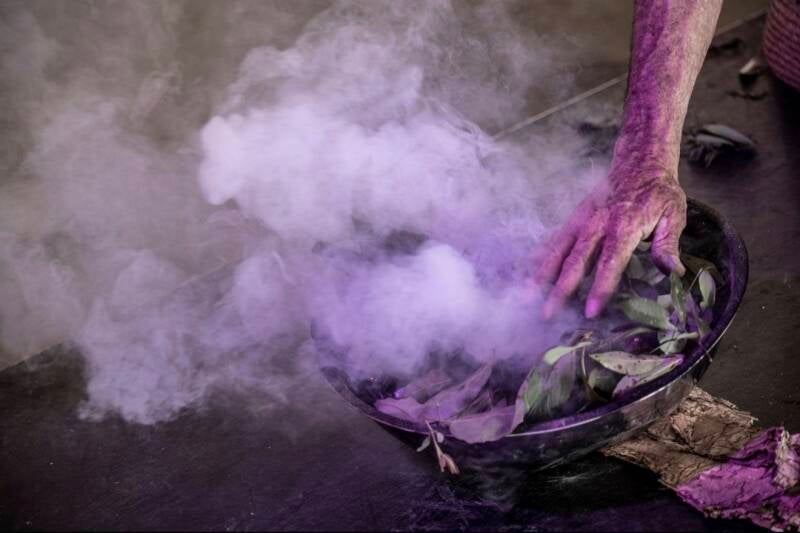
When her scent is inhaled — smoky, green, slightly bitter, ancient — it moves straight into the emotional center of the brain. Some might call this the limbic system. A witch might call it the seat of the soul.
Through this pathway, mugwort speaks directly to the vagus nerve — the great wandering thread that connects breath, heart, gut, and intuition. When this thread softens, the body remembers what safety feels like.
And when the body feels safe… the soul begins to speak.
This is why so many people dream differently with mugwort.
Not scattered fragments. Not nonsense visions. But dreams that feel like stories — chapters unfolding, symbols weaving together, lessons arriving in order.
Some say mugwort carries the voice of the ancestors in sleep. Others believe she opens the doorway to the collective unconscious. Still others feel she simply clears the psychic fog so truth can rise.
Perhaps all three are true.
Mugwort is often called a veil-thinning plant — meaning she makes the boundary between waking and dreaming, seen and unseen, living and spirit, feel more porous.
You may feel your emotions sharpen.
Your memories deepen.
Your intuition grow louder.
Your heart become more sensitive.
This is not a flaw — this is initiation.
In a world that trains us to numb ourselves, mugwort whispers: To feel is holy.
She is not a soft, cozy herb. She is a sacred fire disguised as leaves. A quiet revolution in plant form. A reminder that your nervous system was never meant to be shut down — only held.
To work with mugwort is to be invited back into your body, your dreamscape, and your remembering.
She teaches you that safety is not absence of feeling — but the courage to feel fully and still remain whole.
And in that remembering… magic returns.

Add comment
Comments