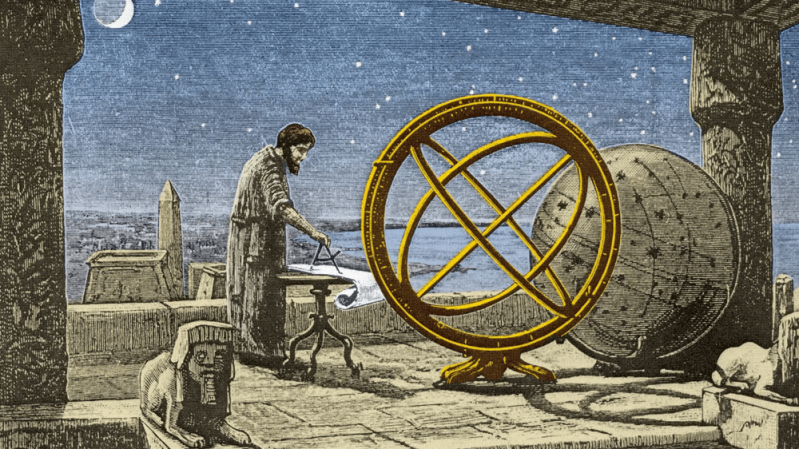
The Heavens Were Never Silent: Mazzaroth, Time, and the Forgotten Language of the Sky
When God Spoke of the Stars
In the Book of Job, God responds to human questioning not with explanations, but with perspective. He does not answer Job’s suffering directly. Instead, He asks him to consider the vastness of creation—the sea, the dawn, the storehouses of snow… and the stars.
Among these questions appears a word many readers skim past without realizing its significance:
Mazzaroth.
“Can you bring forth the Mazzaroth in its season?”
This is not a poetic flourish or a metaphor. Mazzaroth is a Hebrew term referring to the constellations of the zodiac—the twelve divisions of the heavens through which the sun moves over the course of a year.
This means something important, and often overlooked:
The zodiac was known, named, and acknowledged within the Old Testament itself.
⸻
Observation Was Never the Problem
There is a common belief that astrology is incompatible with the Bible—that the stars were dismissed, denied, or forbidden altogether. But Scripture tells a more nuanced story.
The Bible repeatedly warns against worshipping the stars.
It does not warn against observing them.
In fact, the heavens are described as orderly, purposeful, and communicative:
• They mark seasons
• They establish times
• They reflect divine order
God does not ask Job whether the stars exist.
He asks whether Job understands their ordinances—their laws, rhythms, and appointed movements.
The problem was never that ancient people looked to the sky.
The problem was forgetting the source behind it.
⸻
The Sky as a Sacred Calendar
Long before printed calendars, digital clocks, or standardized time systems, humanity lived by celestial rhythm.
• The moon marked months
• The sun marked days
• The stars marked seasons
Agriculture, fasting, feasting, rest, and ritual were all aligned with the heavens. Time was not abstract or mechanical—it was relational and embodied.
The Gregorian calendar, introduced much later, brought efficiency and uniformity. But it also severed something subtle: our intimate relationship with natural cycles.
When we stopped listening to the sky, we began forcing the body.
Perhaps what we call burnout today is not a failure of discipline, but a misalignment with rhythm.
⸻
Mazzaroth and the Language of Seasons
In ancient understanding, the zodiac was not a system of personality traits or fate. It was a seasonal map.
Each constellation corresponded to shifts in light, energy, climate, and collective focus on Earth. Just as winter calls us inward and spring invites emergence, the movement of the heavens mirrored the movement of life itself.
The zodiac was less about “who you are” and more about what time it is.
This is why God speaks of bringing forth Mazzaroth in its season.
Timing mattered. Order mattered. Alignment mattered.
⸻
Before Science and Spirit Were Divided
There was a time when astronomy, spirituality, healing, and daily life were not separate domains.
The sky informed planting and harvesting.
The body followed the land.
The land responded to the heavens.
This integrated worldview is echoed throughout Scripture—not as superstition, but as coherence.
Modern systems thrive on fragmentation.
Ancient systems thrived on unity.
What we now label as “new age” ideas often turn out to be very old wisdom, stripped of context and depth.
⸻
The Stars Were Never Meant to Rule Us
The Bible is clear on one thing: nothing in creation replaces God.
But it is equally clear that creation speaks.
The stars were never meant to control human destiny.
They were meant to mark time, reflect order, and point beyond themselves.
“The heavens declare the glory of God,” the Psalms remind us.
Perhaps remembering the stars is not about reclaiming astrology—but about reclaiming reverence.
⸻
Listening Again
The heavens are still moving.
The seasons are still turning.
The sky is still speaking.
The question is not whether this wisdom exists—but whether we are willing to listen without fear, without projection, and without forgetting where it comes from.
Maybe the language of the heavens was never lost.
Maybe it was simply waiting for us to look up again.
Add comment
Comments