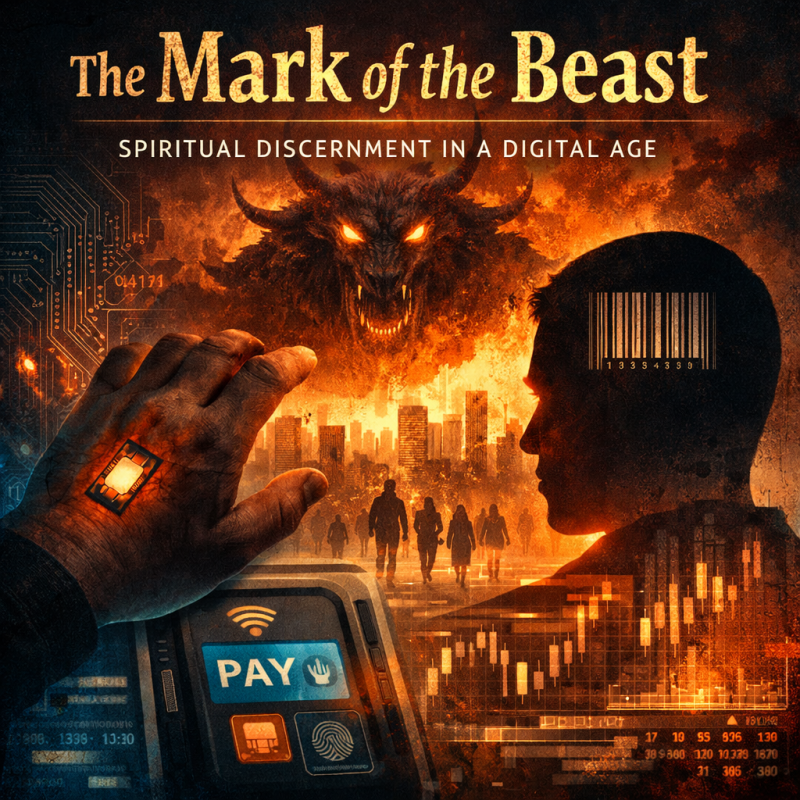
The Mark of the Beast: Discernment, Technology, and Spiritual Choice in a Digital Age
The Book of Revelation has always been meant to awaken discernment, not panic. Its imagery is symbolic, layered, and prophetic—designed to call humanity into awareness of spiritual realities unfolding alongside earthly systems.
One passage, in particular, continues to raise important questions for believers navigating an increasingly technological world:
*“It also forced all people, great and small, rich and poor, free and slave, to receive a mark on their right hands or on their foreheads, so that they could not buy or sell unless unless they carried the identifying mark associated with allegiance to the beastly system described in Revelation.
This passage presents a sobering image: a world in which participation in everyday life—commerce, provision, survival—is conditioned upon compliance with a centralized authority. The concern is not merely the mark itself, but what the mark represents: alignment, submission, and surrender of autonomy in exchange for access and security.
Symbolism, Control, and Allegiance
Throughout Scripture, marks placed on the hand or forehead symbolize action and thought—what we do and what we believe. In this context, the warning appears less about a single object and more about a system that demands loyalty, shaping both behavior and consciousness.
Revelation does not describe this development as sudden. Instead, it unfolds progressively—through systems that normalize dependence, convenience, and compliance. This is where discernment becomes essential.
A Digital Trajectory Worth Examining
The Bible does not name modern technologies, yet it describes conditions that feel increasingly familiar:
• A move toward cashless systems
• Digital identification tied to access
• Centralized control over buying and selling
• Increasing pressure to comply in order to participate fully in society
None of these, on their own, constitute the mark described in Revelation. However, when viewed together, they suggest a trajectory—a gradual shaping of infrastructure that could one day make such a system possible.
Technology itself is not evil. Innovation is not the enemy. The concern arises when technology becomes inseparable from obedience, and when refusal carries tangible consequences.
Choice, Consent, and Spiritual Awareness
One of the most important aspects of the biblical warning is that the mark involves choice. It is not described as accidental or unknowingly received. This implies awareness, consent, and alignment.
That is why the call is not to fear the future, but to remain spiritually awake in the present.
Discernment asks:
• Who controls the systems I depend on?
• What am I being asked to trade for convenience?
• At what point does participation require compromise of conscience?
These are not questions of paranoia, but of spiritual maturity.
A Call to Watchfulness, Not Panic
Revelation was never meant to terrify believers into withdrawal from the world. It was meant to prepare them to stand firm within it.
Watchfulness does not mean rejecting all technology. It means remaining conscious, prayerful, and rooted—unwilling to surrender inner authority for external comfort.
As systems evolve, so must discernment.
Closing Reflection
The warning of Revelation is ultimately about allegiance. Where do we place our trust? What systems shape our survival? And when pressure mounts, what guides our choices?
This is not about predicting timelines or assigning certainty. It is about awareness, wisdom, and spiritual sovereignty in an age of accelerating change.
The invitation is simple, yet profound:
Stay awake. Stay grounded. Choose carefully.
Add comment
Comments